
Among the Sensex firms, ITC, Kotak Mahindra Bank, ICICI Bank, Nestle, Axis Bank, IndusInd Bank, UltraTech Cement, Bajaj Finance, Maruti and HDFC Bank were the major laggards.

Moody's Investors Service on Friday affirmed India's rating at the lowest investment grade of 'Baa3', with a stable outlook, saying high growth will support a gradual increase in income levels, but flagged risks of populist policies due to rise in political tensions. Moody's said although India's potential growth has come down in the past 7-10 years, the growth would outpace all other G20 economies through at least the next two years, driven by domestic demand. Moody's said the restoration of robust growth prospects post-pandemic, the effective commitment to inflation targeting and the rehabilitation of the financial system aided by reform supports its view of strengthening monetary and macro policy effectiveness.

Costlier vegetables slowly pushed retail inflation, which had remained well within the Reserve Bank's comfortable level of 4 per cent during most part of 2019, peaked to more than three-year high of 5.54 per cent in November.

India has been relatively insulated from the severe headwinds in the West. However, with a third of the global economy expected to slip into recession in calendar year 2023, the impact will strongly be felt on India's exports and trade economy, leading economists said in a panel discussion at the Business Standard BFSI Insight Summit in Mumbai on Wednesday. The panel comprised former Reserve Bank of India executive director and former Monetary Policy Committee member Mridul Saggar, State Bank of India Chief Economic Advisor Soumya Kanti Ghosh, Citibank India Chief Economist Samiran Chakraborty, ICRA Chief Economist Aditi Nayar, and IndusInd Bank Chief Economist Gaurav Kapoor. The topic of the panel discussion was No recession in sight: Is India decoupled from developed economies?

On the exports front, Bajaj is under pressure in Bangladesh and Africa. On the domestic front, it could ride improvement in rural demand and new launches but it also has to cope with competitive intensity and a high base. The management projects 7-8 per cent volume growth in domestic 2W in financial year 2025 (FY25) with moderation in H2FY25 due to a high base Y-o-Y.

With the prediction of an above normal monsoon in 2024, the government is expecting food prices to come down, the finance ministry's monthly economic report for March has said. The report, released on Thursday, said robust foreign inflows and comfortable trade deficits were expected to keep the rupee within a comfortable range. "Further easing of food prices is on the anvil as IMD (India Meteorological Department) has predicted above-normal rainfall during the monsoon season, which is likely to lead to higher production, assuming good spatial and temporal distribution of the rainfall," the monthly report, released by the Department of Economic Affairs, said.

'India is not so distant from years of high and entrenched inflationary expectations that it should start trying to play games with the economy the way the West's central bankers think they are entitled to,' argues Mihir S Sharma.

investors will look to the new governor to continue the banking sector clean-up with the same urgency as Mr Rajan, who was targeting fully cleaned-up and provisioned balance sheets by March 2017

IndiGo share price today: IndiGo share price fell as much as 4.8 per cent to a low of Rs 4,275 per share on the BSE in Monday's intraday trade as investors booked profit in the stock post a its April-June quarter (Q1) results for financial year 2024-25 (FY25). The stock ended 1.36 per cent lower at Rs 4,430 as against a 23-points gain in the benchmark BSE Sensex. The selling also got exacerbated as the management commentary, post Q1FY25 results, highlighted that inflationary pressure could likely dent July-September (Q2FY25) performance.

Chief Economic Advisor V Anantha Nageswaran on Thursday said the economy is expected to grow at 6.5 per cent in the current fiscal notwithstanding deficient rains in August. India recorded economic growth of 7.8 per cent in the April-June quarter of 2023-24 against 13.1 per cent in the year-ago period. India's economy in Q1 grew at the fastest pace in a year, on the shoulders of a boost in capital expenditure both at central and state levels, along with stronger consumption demand, especially in rural areas, and improved performance in the services sector, he said.

'In the short term you keep your return expectations very, very low; in the medium term be prepared to invest and in the long term growth will come and your returns from stocks will be high.'
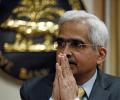
Reserve Bank Governor Shaktikanta Das on Friday said the rupee is holding up relatively well when compared to the currencies of emerging market peers and advanced economies. Days after the domestic currency breached the 80-level against the dollar, Das said Reserve Bank of India (RBI) has zero tolerance for volatile and bumpy movement in the rupee and added that the central bank actions have helped in smoother movement. He said RBI has been supplying US dollars to the market to ensure adequate supply of liquidity and also clarified that the central bank does not target a particular level for the currency.
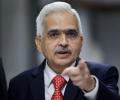
The Reserve Bank of India on Friday decided to keep the policy rate unchanged for fourth time in a row as it maintains a tight vigil on inflation. The rate increase cycle was paused in April after six consecutive rate hikes aggregating to 250 basis points since May 2022. Announcing the bi-monthly monetary policy on Friday, RBI Governor Shaktikanta Das said the Monetary Policy Committee (MPC) unanimously decided to keep the repo rate unchanged at 6.5 per cent.

Going forward, the February factory output may be impacted as several industries such as automobiles, technology, pharma and fashion have some exposure to imports of raw and intermediate materials from China.

In a warning sign for the Democrats, Indian-Americans' attachment to the party is declining in the United States while the share of Republican identifiers held steady.

On a five-day rolling basis, FPI selling is the highest in 24 years.

From the Sensex basket, Tata Motors, State Bank of India, Tata Steel, Power Grid, NTPC, Bajaj Finserv, Bajaj Finance and Asian Paints were the major laggards.

After unseasonal rains, supply disruptions and pandemic-induced woes pushed retail inflation well over the Reserve Bank's comfort zone in 2020, the scenario is likely to stay that way at least in the short term as economic recovery slowly gains foothold. For most part of this year, pricier food items pushed the retail inflation, based on Consumer Price Index (CPI), higher in the range of 6.58-7.61 per cent, except for March when the reading was 5.91 per cent. Experts believe retail inflation is likely to average around 6.3 per cent this fiscal and mostly will remain sticky going forward owing to pick-up in demand across sectors.

rediffGURU Dev Ashish answers your personal finance and mutual fund queries

The Interim Budget for 2024-25 (FY25) to be presented on February 1 is likely to assume 10-10.5 per cent nominal gross domestic product (GDP) growth against 8.9 per cent estimated for FY24 by the National Statistical Office (NSO). "We were waiting for the First Advance Estimates GDP numbers for FY24. "We will finalise the nominal GDP growth assumption for FY25 Interim Budget in a couple of days.
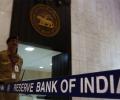
Price rise in services sector after the goods and services tax (GST) gets implemented and the pay hike of central government employees will make inflation control a tough job for the central bank

The Iranian missile attack on Israel appears to have been defeated and ineffective, United States President Joe Biden said, hours after Tehran fired nearly 200 missiles at Israel.

FDs are not advisable for long-term wealth creation as their post-inflation, post-tax returns are not very attractive.

GDP growth of 7.7 per cent in the first half of this fiscal has "left sceptics gasping and woefully behind the curve", an RBI article said on Wednesday. It also stressed the buildup in the growth momentum is likely to be sustained. The article on the state of the economy published in the Reserve Bank's December Bulletin on Wednesday also said CPI-based retail inflation is expected to ease to 4.6 per cent in the first three quarters of 2024-25 from 5.6 per cent in November.

The Fed has said it wants to be "reasonably confident" in the inflation outlook before a rate hike.

Reigning champions City are also involved in a separate independent hearing into the club's alleged breaches of Premier League financial regulations which began in September, with a verdict expected some time before the end of the current season.

Targeting Modi over inflation, Priyanka called him a "mehengai" man.
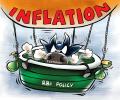
Analysts say RBI will cut rates because the liquidity crunch that began this time last year is still hurting the economy and also with an eye on the August industrial production numbers, which showed a contraction by 1.1 per cent -- the steepest in seven long years.

'Young investors should focus more on equity, while retired senior citizens should prioritise fixed income.' 'Mid-career investors should aim for a balanced allocation.'

Finance Minister Ishaq Dar, who presented the budget in the National Assembly, the lower house of parliament, said the government will target a growth rate of 3.5 per cent in the coming fiscal year.

Gold, a safe-haven bet, is likely to continue its record-smashing journey in the New Year, rising to Rs 85,000 per 10 grams and even Rs 90,000 level in domestic markets if geopolitical tensions and global economic uncertainties continue.

Total debt for listed Indian companies excluding financials fell only 4 per cent to $368 billion in the year ended in March 2015.

As many as 80-85 per cent Paytm wallet users will not face any disruption because of regulatory actions, and the remaining users have been advised to link their apps to other banks, RBI Governor Shaktikanta Das said on Wednesday. The Reserve Bank of India on January 31 barred Paytm Payments Bank Ltd (PPBL) from accepting deposits, credit transactions, or top-ups in any customer accounts.

While the economy seems to be on a firm growth path, the fight against inflation is not over yet. Shaktikanta Das seems to be in no hurry. After playing well through a five-year Test match, he doesn't want to get out hit wicket, observes Tamal Bandyopadhyay.
The retail inflation, which is factored in by the RBI to arrive at its monetary policy, has been on decline since last month. The previous low was 5.54 per cent in November 2019. The government has asked the RBI to restrict the inflation around 4 per cent, with a margin of 2 per cent on the either side.

Oil and LNG prices are likely to shoot up if Iran is to block Strait of Hormuz, through which countries like India import crude oil from Saudi Arabia, Iraq and UAE, leading to a spike in inflation, analysts said on the Iran-Israel conflict. The Iran and Israel conflict has escalated over the last few days. Iran first launched drone and rocket attacks on Israel, which retaliated by firing a missile. Crude oil prices have hovered around USD 90 per barrel since the conflict.

'The long-term impact of elections is minimal.'

Pushed by rising prices of essential kitchen items, the retail inflation rose to an eight-month high of 7.34 per cent in September, making the RBI's task to push growth by reducing the interest rate even more difficult in coming the days. The Consumer Price Index (CPI)-based inflation was 6.69 per cent in August and 3.99 per cent in September 2019. Inflation has been hovering above 4 per cent since October 2019.

Chief executive officers (CEOs) across sectors have expressed intentions to expand capacities, expecting the government's target to invest a record Rs 11.11 trillion on infrastructure development will act as a catalyst for a jump in consumer demand. "With the government planning a capex of Rs 11.11 trillion, private sector investment will come in a big way. Companies will be preparing for it right from today," H M Bangur, chairman of Shree Cement, told Business Standard. For the past few years, the investment scene in India has been dominated by government capital expenditures; private investments in the manufacturing sector have remained muted.

'The Budget needs to focus more on social welfare schemes.'
